
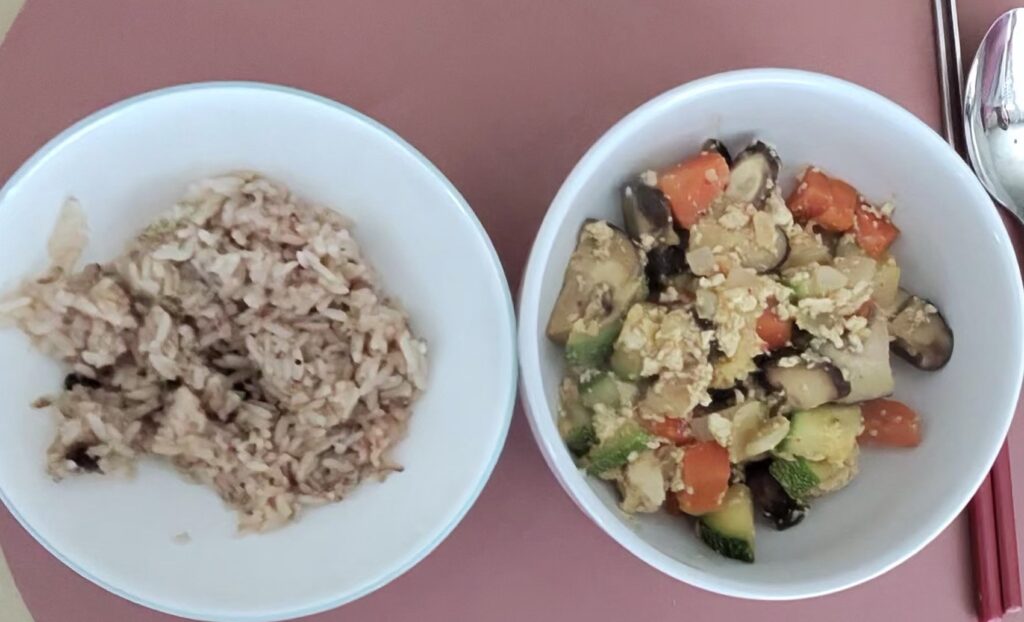
Gangdoenjang (강된장) is what happens when you stop treating doenjang as the seasoning in a soup and make it the dish itself. Where doenjang-jjigae is a stew you eat with a spoon, gangdoenjang is cooked down thick — closer to a chunky, savory paste than a soup — and spooned over hot rice or scooped into a lettuce wrap.
The version below is loaded with vegetables and tofu, which does two things: it stretches a couple of tablespoons of doenjang into a meal for the whole table, and it makes the dish substantial without any meat at all.
This One Is Vegetarian
Plenty of Korean home cooking is harder to make vegetarian than it looks, because anchovy stock and salted seafood hide inside dishes that appear to be all vegetables. This one does not have that problem. There is no meat, no anchovy stock, and no fish sauce in it — the savory depth comes entirely from the doenjang and the mushrooms.
It is vegan as written too. Doenjang is soybeans and salt, so the only thing worth a glance is the label on your particular tub — see our guide to doenjang for what to look for.
What You Need
Enough for three or four bowls of rice.
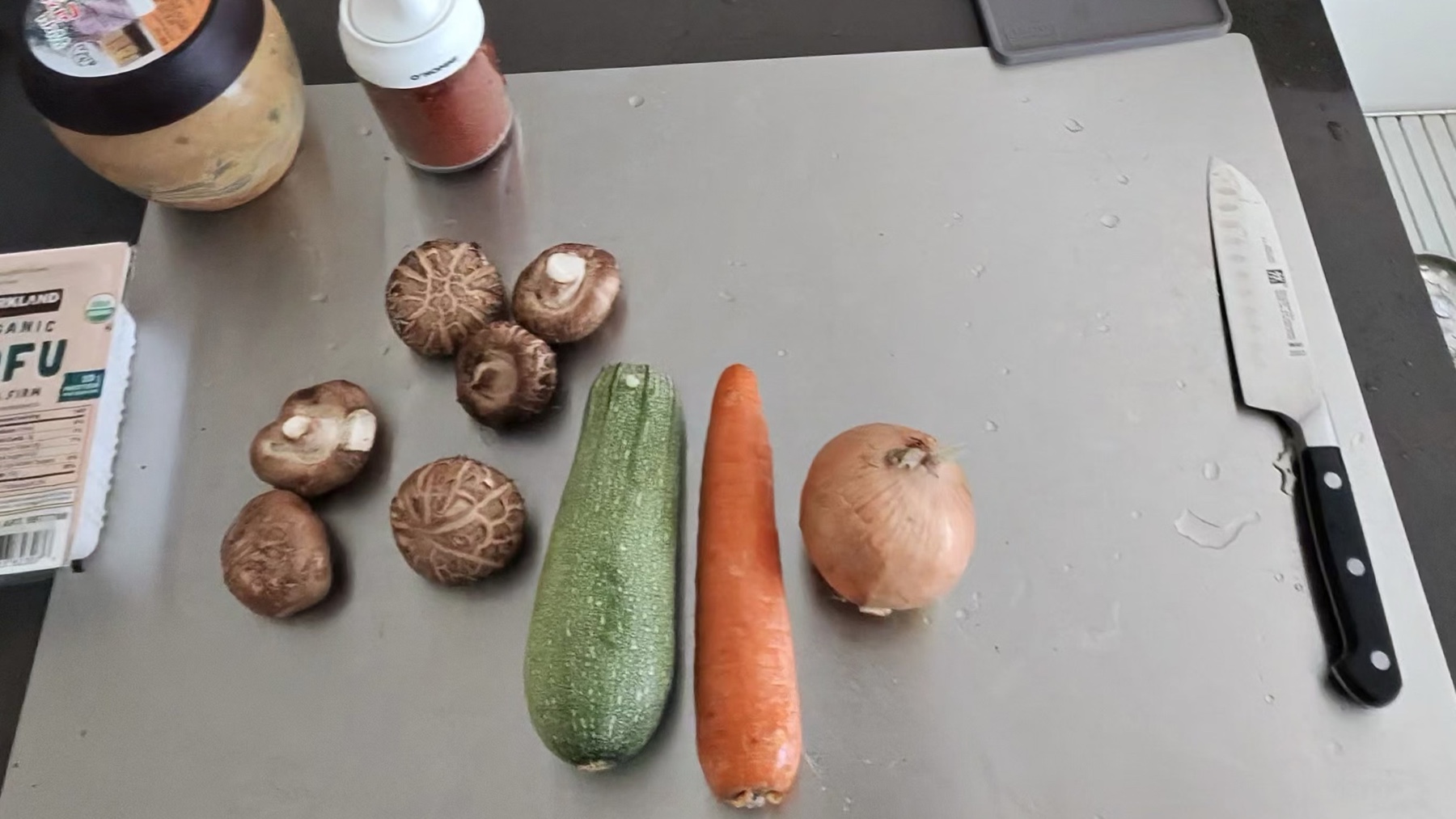
- 1 onion, finely diced
- 1/2 zucchini (Korean aehobak if you have it), finely diced
- 150 g shiitake mushrooms (about 5 oz), finely diced
- 1/2 carrot, finely diced
- 1 block tofu (about 14 oz) — firm or medium-firm holds up best
- 2 tbsp doenjang
- 2 tbsp gochugaru (Korean chili flakes)
- 100 ml water (a scant 1/2 cup)
- Olive oil for the pan
- Hot short-grain rice, to serve
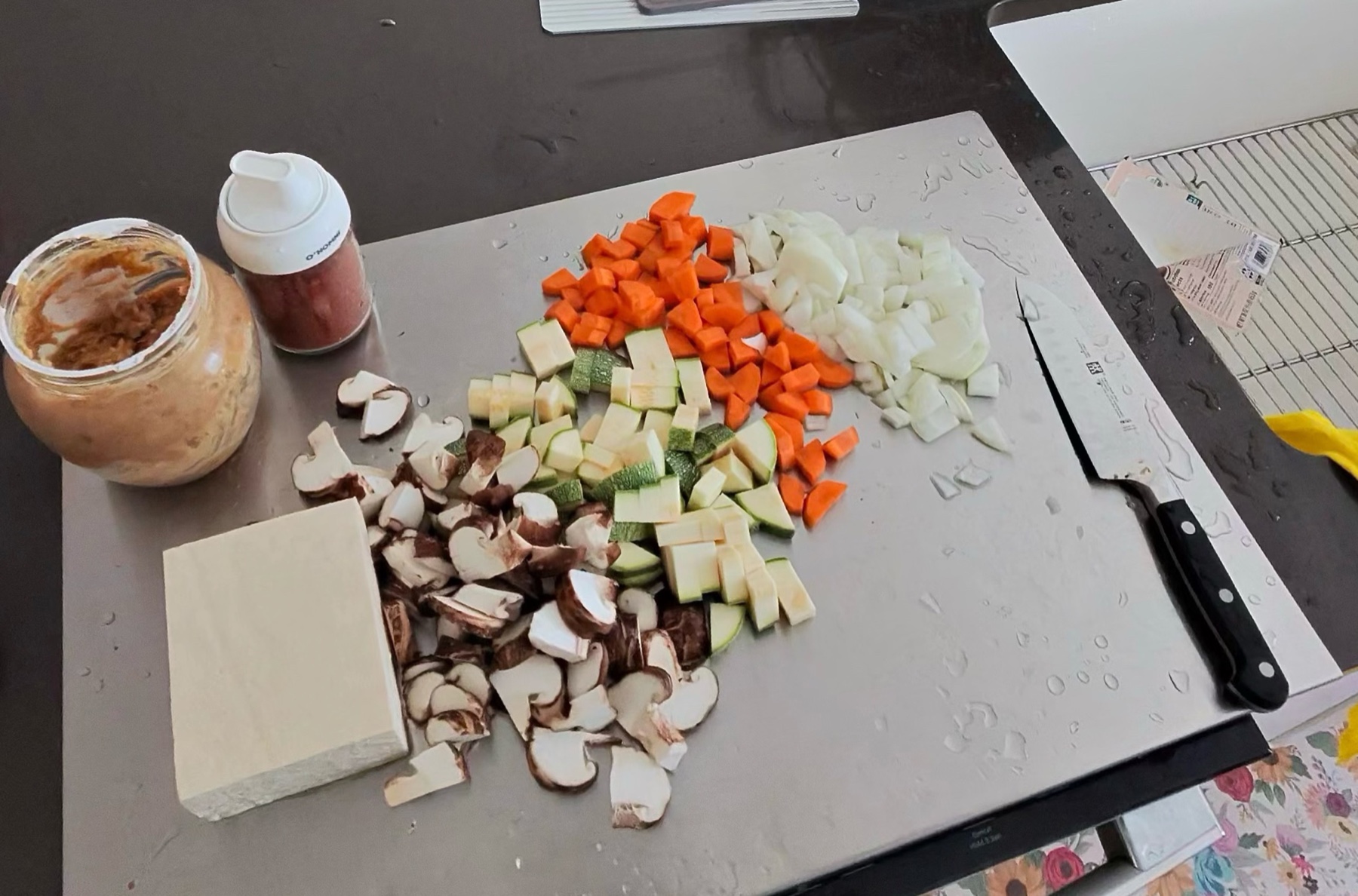
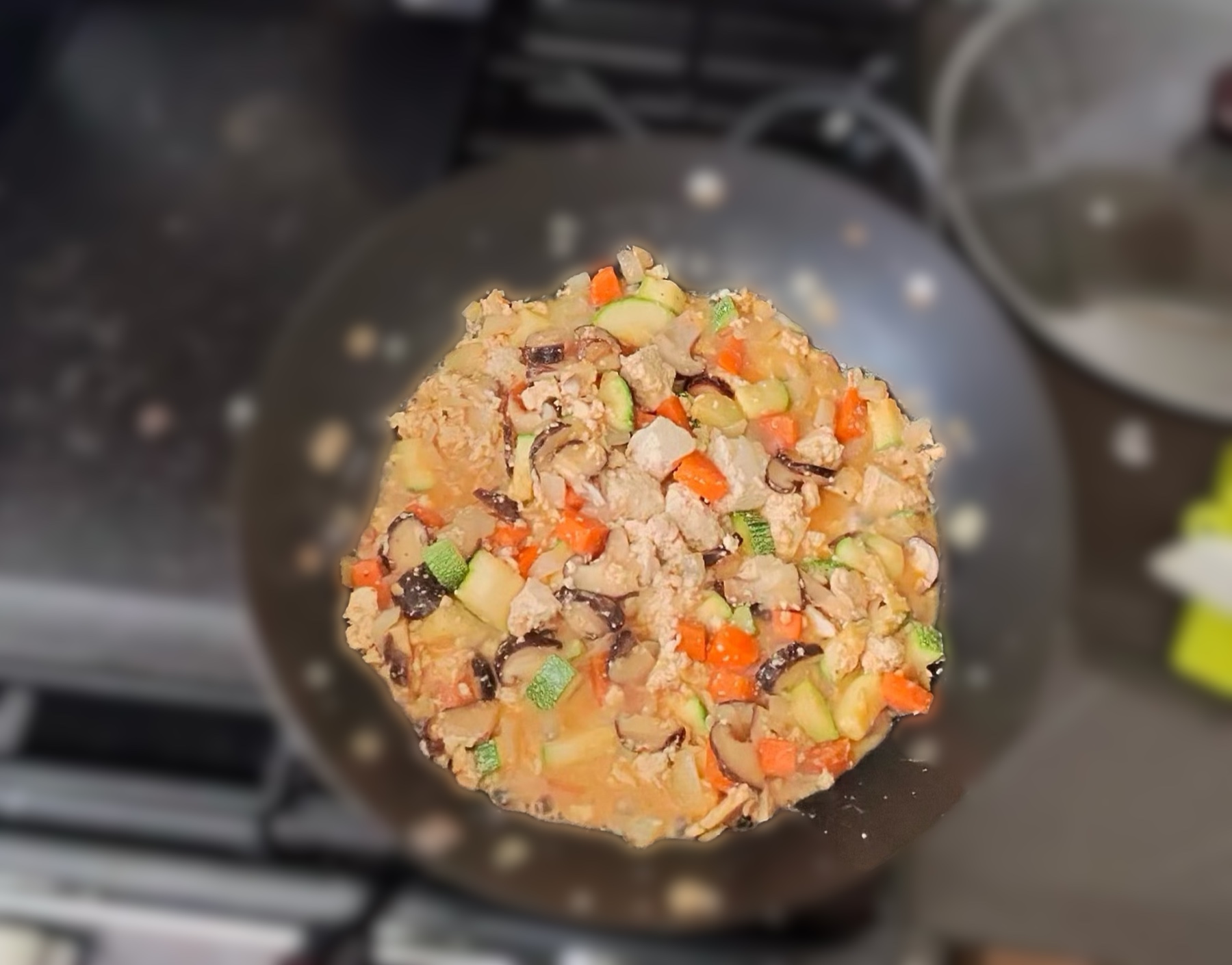
Dice everything small and roughly the same size. This is not a dish with distinct chunks of vegetable — everything should end up about the size of the crumbled tofu.
How to Make It
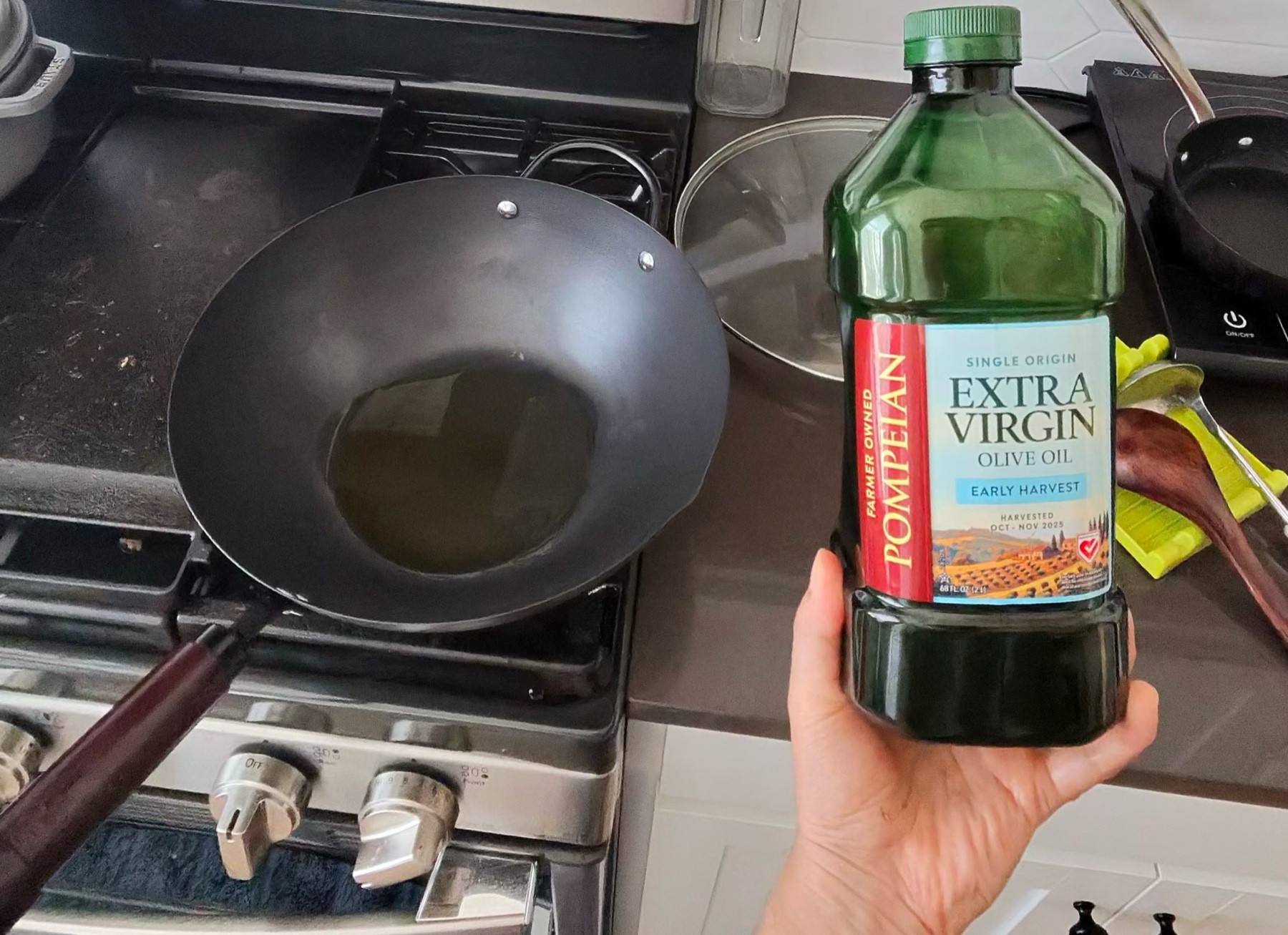
- Heat olive oil in a large wok or skillet over medium-high. Add the onion, zucchini, shiitake and carrot all together and stir-fry until the onion turns translucent and the mushrooms have given up their moisture.
- Add the whole block of tofu straight into the pan and break it apart with your spatula as it cooks. Keep going until it is crumbled through the vegetables and the excess water has cooked off.
- Stir in the doenjang, the gochugaru, and the water. Mix until the paste is evenly distributed — no pockets of undissolved doenjang.
- Simmer until it reaches the thickness you want. For spooning over rice, stop while it still moves in the pan. For a lettuce-wrap dip, take it further until it mounds on the spoon.
The Parts That Matter
- Taste before you decide it is done. Doenjang brands vary enormously in saltiness — the same 2 tablespoons can land mild or aggressive depending on the tub. Start here, and add a little more if it tastes flat.
- Cook the water out of the tofu. If you add the doenjang while the pan is still wet, you get soup instead of gangdoenjang. Give the tofu a few minutes on its own first.
- Thickness is the whole point. The name means thick doenjang. If it pours, keep going.
- Gochugaru here is for color and depth more than heat. Two tablespoons sounds like a lot and is not; Korean chili flakes are far milder than they look.
How to Eat It
Two ways, and both are correct. Spoon it over a bowl of hot rice and mix — this is the everyday version, and the rice does most of the work of balancing the salt. Or set the pan in the middle of the table with a plate of lettuce and perilla leaves and let everyone build their own ssam, with a spoonful of gangdoenjang on rice inside the leaf.
Leftovers keep three or four days in the refrigerator and reheat well in a skillet. They also thicken further as they sit, which is not a problem — add a splash of water when you warm it up.
Make It Yours
- More mushrooms. Shiitake is doing the umami work that meat would do in a traditional version. Doubling them is a legitimate move.
- Add a spoonful of gochujang for a sweeter, rounder version. Start small — it changes the character quickly.
- Potato cut to the same small dice adds body and softens the salt.
- Not vegetarian? A little minced pork browned before the vegetables is how many Korean households make it. The method is otherwise identical.
If doenjang is new to you and you want to understand what is actually in that tub — and how it differs from Japanese miso — start with our doenjang guide.