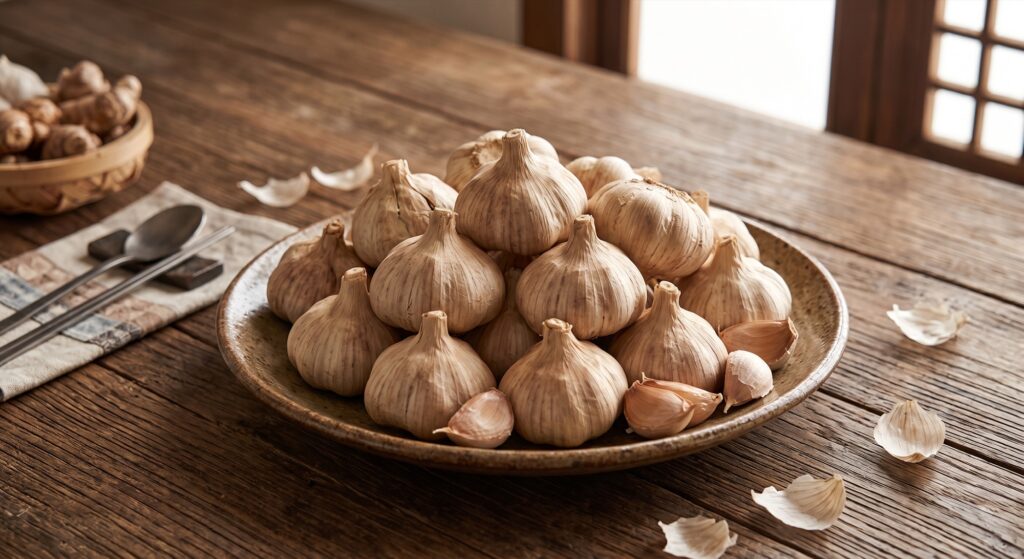
Ask an American cook about garlic and you will hear about Italian food. Ask a Korean cook and the question barely makes sense — garlic is not a flavor you add to Korean food, it is part of the floor the food stands on. Korea is consistently among the highest per-capita garlic consumers in the world, and it shows up in almost every savory dish on the table.
This guide covers three things: what garlic actually does, where it appears in Korean cooking, and how to handle it so you get the most out of it.
Garlic Runs Deep in Korea
The founding myth of Korea involves garlic. In the Dangun legend, a bear and a tiger ask to become human, and are told to stay in a cave for one hundred days eating only garlic and mugwort. The tiger gives up. The bear endures, becomes a woman, and her son founds the first Korean kingdom.
It is a story, not a nutrition claim. But it tells you something real about how old and how central garlic is here. A Korean kitchen without garlic is not a Korean kitchen missing a seasoning — it is one that cannot make most of its dishes at all.
What Garlic Actually Is
Garlic (마늘, maneul) is a bulb in the allium family, alongside onions, leeks, and scallions. Whole and intact, it is fairly mild. Its characteristic pungency only appears once you damage the cells.
When garlic is crushed, chopped, or minced, an enzyme in the clove converts a compound called alliin into allicin — the source of the sharp smell and much of what researchers study. Allicin is unstable; it breaks down into other sulfur compounds fairly quickly, and heat speeds that up. This one fact explains most of the practical advice further down this page.
Potential Benefits
Garlic is one of the more heavily studied foods in the world, and the honest summary is that the research is interesting but modest. A few areas come up repeatedly:
- Organosulfur compounds. Garlic’s sulfur compounds are the focus of most research on it. Reviews describe garlic as a food with a complex mixture of these compounds rather than one active ingredient.
- Cardiovascular measures. A number of studies have looked at garlic and blood pressure or cholesterol. Findings vary considerably by preparation, dose, and study design, and effects reported are generally small.
- Flavor that replaces salt. This one is not a health claim about garlic itself, but a practical one. Garlic, ginger, and scallion give a dish enough depth that it needs less salt to taste finished.
- It brings vegetables and aromatics into everyday meals. Like kimchi, garlic is a low-effort way to make plain food worth eating.
What garlic is not is medicine. Eating it does not prevent or treat a medical condition, and garlic supplements are a different thing from garlic in food. If you take blood thinners or are heading into surgery, ask your doctor before taking concentrated garlic supplements — this is a known interaction worth raising.
Eat garlic because it makes food taste better. Any benefit beyond that is a bonus, not a reason.
K-Food 4 U
Where Garlic Shows Up in Korean Food
This is the part that surprises people coming to Korean cooking from elsewhere. Garlic is not reserved for a few dishes — it is in most of them, in several different forms.
1. Kimchi
Minced garlic is part of the seasoning paste that goes between every cabbage leaf, along with gochugaru, ginger, and salted seafood. It is one of the reasons kimchi tastes savory rather than merely spicy. See our guide to kimchi for the full picture.
2. Marinades — Bulgogi, Galbi, Dakgalbi
The standard Korean marinade is soy sauce, sugar or pear, sesame oil, black pepper, and a serious amount of minced garlic. Grated pear tenderizes; garlic is what makes it taste Korean rather than merely sweet-savory.
3. Raw, at the Barbecue Table
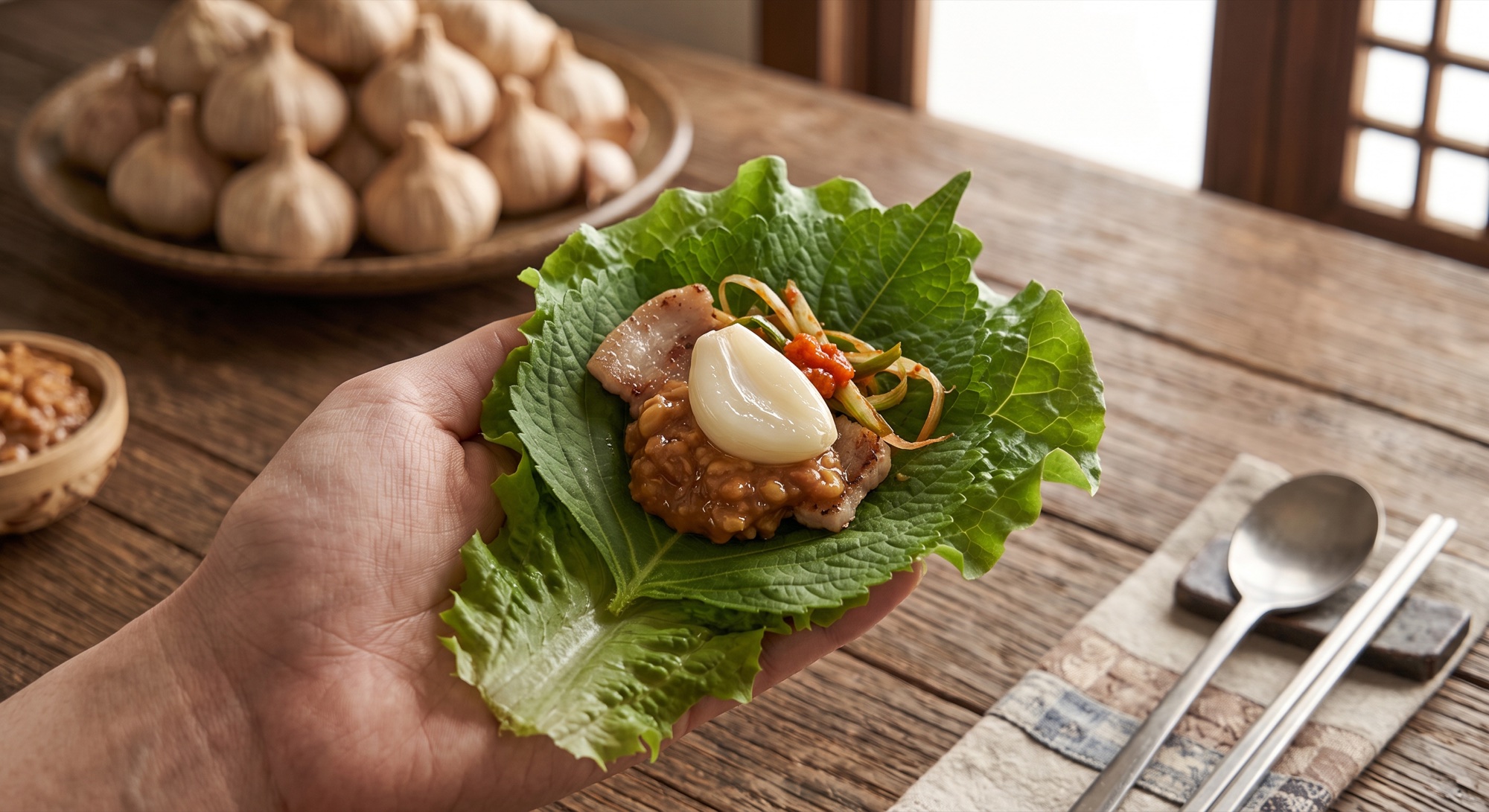
At a samgyeopsal restaurant, whole peeled cloves are set on the grill beside the pork belly, where they soften and turn sweet and nutty. Thin raw slices go into the lettuce wrap (ssam) with the meat, ssamjang, and a slice of grilled kimchi. Raw garlic in a ssam is one of the sharpest things on a Korean table, and it is the point.
4. Stews and Soups
Kimchi jjigae, doenjang jjigae, budae jjigae, seolleongtang — minced garlic goes in near the start or is stirred in toward the end depending on the dish. Samgyetang, the whole young chicken stuffed with rice and ginseng, is packed with whole cloves that turn soft in the broth.
5. As a Side Dish in Its Own Right
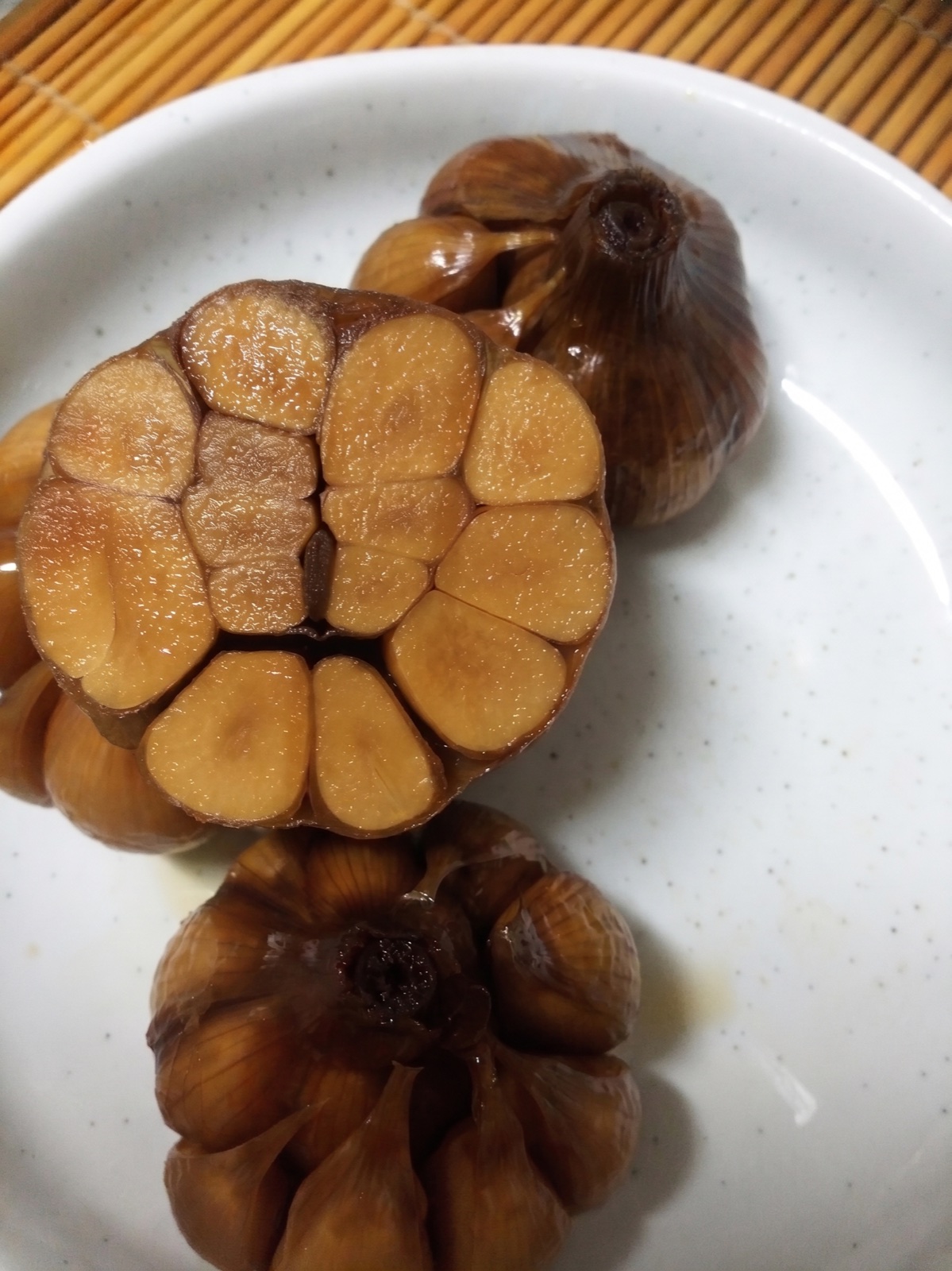
Garlic is not only a seasoning in Korea. Maneul jangajji is garlic pickled in soy sauce and vinegar — sometimes loose cloves, often whole heads left intact — and served as banchan, eaten a clove at a time. The brine turns the flesh amber and mellow, trading the raw bite for something sweet, sour and savory. Maneuljjong — garlic scapes, the green flower stems — are stir-fried with soy sauce and dried shrimp. Black garlic, aged slowly until it turns dark and sweet, is eaten on its own.
6. Korean Fried Chicken
The soy-garlic glaze is one of the two default flavors of Korean fried chicken, alongside sweet-spicy yangnyeom. It is essentially soy sauce, sugar, and a large quantity of garlic reduced into a syrup.
How to Actually Use It
Chop it, then let it sit
Because allicin only forms after the cells are broken, a commonly recommended habit is to mince or crush your garlic and then leave it for about ten minutes before it hits the heat. Doing your other prep in that window costs you nothing. Throwing whole cloves straight into a hot pan gives you a much milder result.
Match the cut to the dish
| Cut | What you get | Use it for |
|---|---|---|
| Whole clove | Mild, sweet, nutty | Grilling, samgyetang, roasting |
| Sliced | Medium, still distinct | Ssam, stir-fries, topping stews |
| Minced | Strong, evenly distributed | Marinades, kimchi paste, jjigae |
| Crushed to paste | Sharpest, most pungent | Dipping sauces, dressings, ssamjang |
Do not burn it
Minced garlic goes bitter fast. In a stir-fry, give it thirty seconds in warm oil before anything else goes in — long enough to smell it, not long enough to brown past golden. If it turns dark brown, start over; that bitterness will run through the whole dish.
Buying and storing
- Buy whole heads, firm and heavy, with tight papery skin and no green shoots or soft spots.
- Store at room temperature in something ventilated — a mesh bag or open bowl. Not the refrigerator, which encourages sprouting, and not a sealed container.
- Jarred minced garlic is what most Korean households actually use on a weeknight, and there is no shame in it. It is milder and slightly sour compared to fresh. For a marinade it is fine; for a raw dipping sauce, use fresh.
- Green shoots in the center are not harmful, just bitter. Halve the clove and flick the shoot out.
- Peeled garlic by the bag is the single biggest time-saver if you cook Korean food regularly, and you do not need a Korean market for it. Costco carries it — see below for what to look for. Korean grocery stores sell it too, usually in smaller bags.
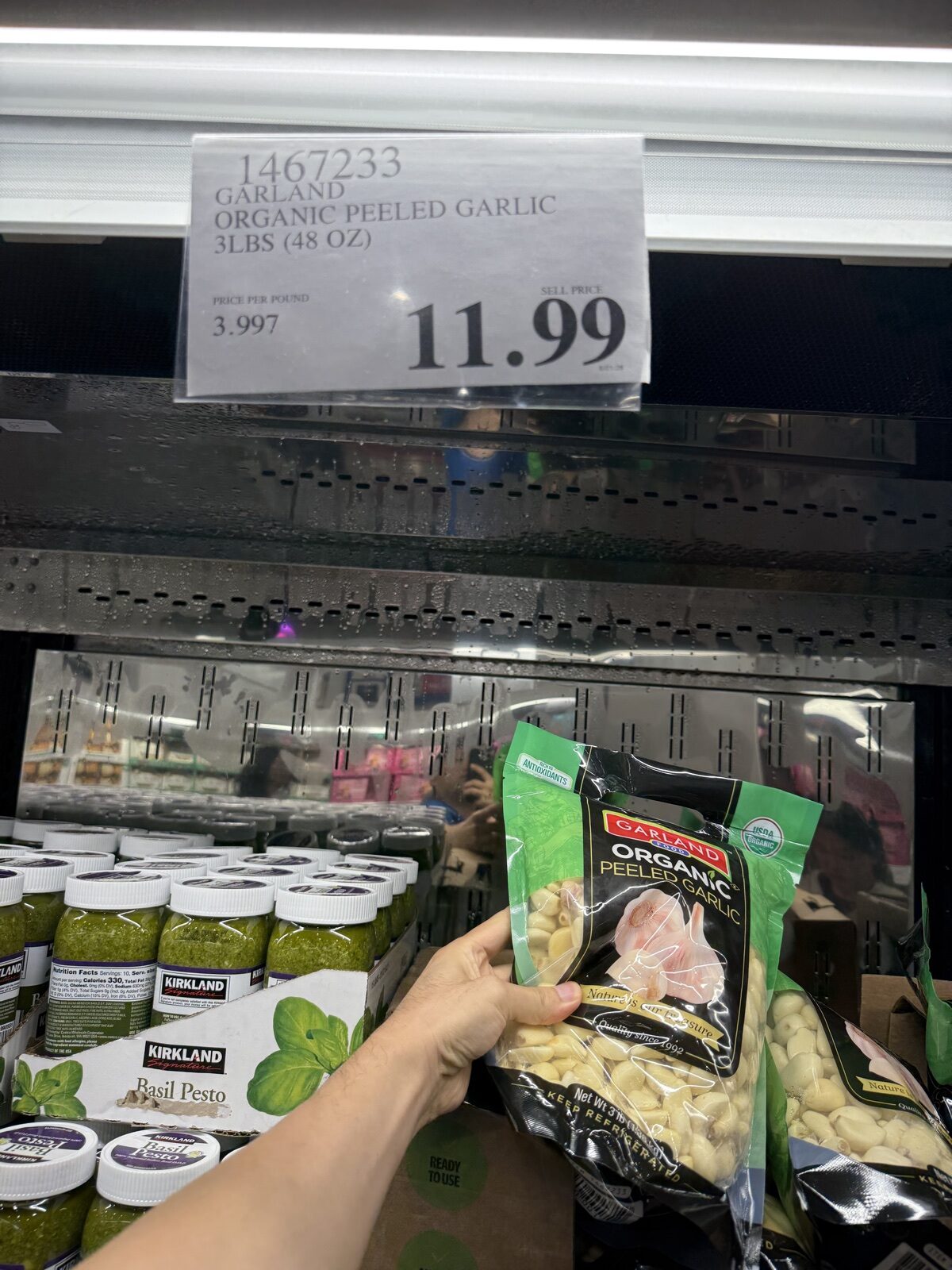
It lives in the refrigerated produce case, not the dry goods aisle. Prices and stock vary by warehouse, so treat the numbers above as the Leesburg store on the day we photographed it rather than a national price. Three pounds is also a serious amount of garlic — this only makes sense if Korean cooking is a regular habit. Check the date on the bag, keep it refrigerated, and if you cook Korean food once a month, buy whole heads instead.
Common Questions
Is Korean garlic different from what I buy at the supermarket?
Korean-grown garlic is generally described as smaller, denser, and more pungent than the large soft-neck varieties common in American supermarkets. For most cooking the difference is minor. Where it shows is in raw applications — a ssam or a dipping sauce — where the sharper garlic is doing more of the work.
How do I get rid of garlic breath?
You do not, entirely. The sulfur compounds responsible are absorbed and released through the lungs, so mouthwash only goes so far. Raw garlic is far worse than cooked. If you are eating raw cloves at a barbecue, everyone at the table is doing the same thing, which is the practical Korean solution.
Can I substitute garlic powder?
For a dry rub, yes. For Korean cooking, generally no. Nearly every application here depends on the texture and moisture of fresh minced garlic in a wet marinade or paste, and powder does not reproduce it.
How much is too much?
Large amounts of raw garlic can irritate the stomach for some people, and it is a common trigger for anyone managing reflux or following a low-FODMAP diet. If you are new to it, start with cooked garlic and work up to raw.
Final Thoughts
If you are trying to cook Korean food at home and only want to change one habit, this is the one: buy more garlic than you think you need, mince it fresh, and let it sit for ten minutes before it goes in the pan. Almost everything else in Korean cooking is built on top of that.
This article provides general food information and is not medical advice. Talk to a healthcare professional before taking garlic supplements, particularly if you take blood thinners.