
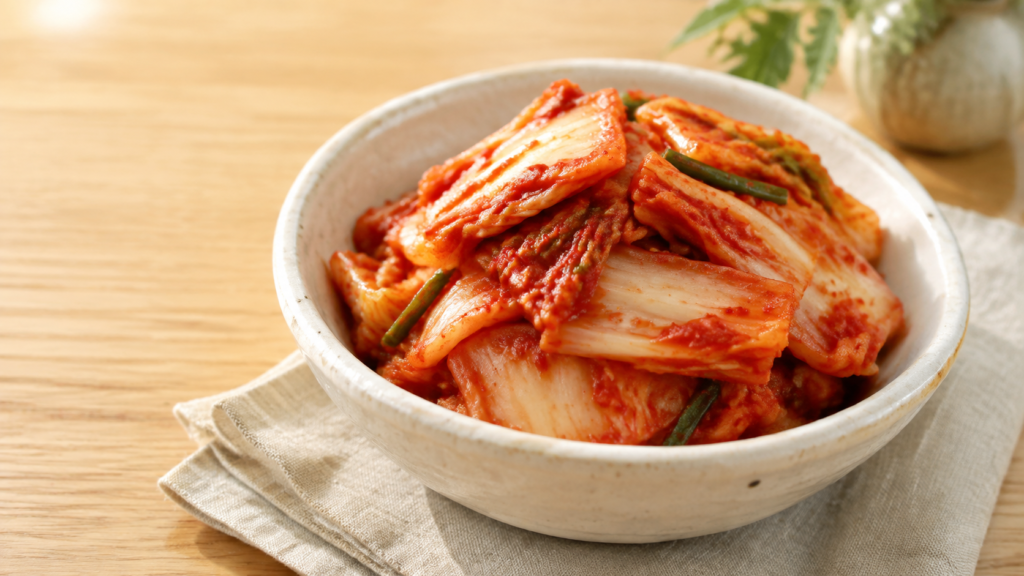
Kimchi is one of Korea’s best-known foods, but it is much more than a spicy side dish. Made by salting, seasoning, and fermenting vegetables, kimchi brings vegetables, fiber, and bold flavor to an everyday meal. Traditionally fermented kimchi may also contain live microorganisms.
As a Korean food lover, I think the best way to understand kimchi is to begin with a small serving beside warm rice. It can taste spicy, sour, salty, refreshing, and deeply savory at the same time. In this guide, you will learn what kimchi is, its potential health benefits, and what to consider before adding it to your diet.
What Is Kimchi?
Kimchi (김치) is a traditional Korean food made from salted and seasoned vegetables. The most familiar type in the United States is baechu kimchi, or napa cabbage kimchi. Other popular varieties include radish kimchi, cucumber kimchi, green onion kimchi, and mild white kimchi.
A typical cabbage kimchi recipe includes napa cabbage, Korean red pepper flakes called gochugaru, garlic, ginger, green onions, and Korean radish. Traditional recipes often include fish sauce or salted shrimp, although vegetarian and vegan varieties are also available.
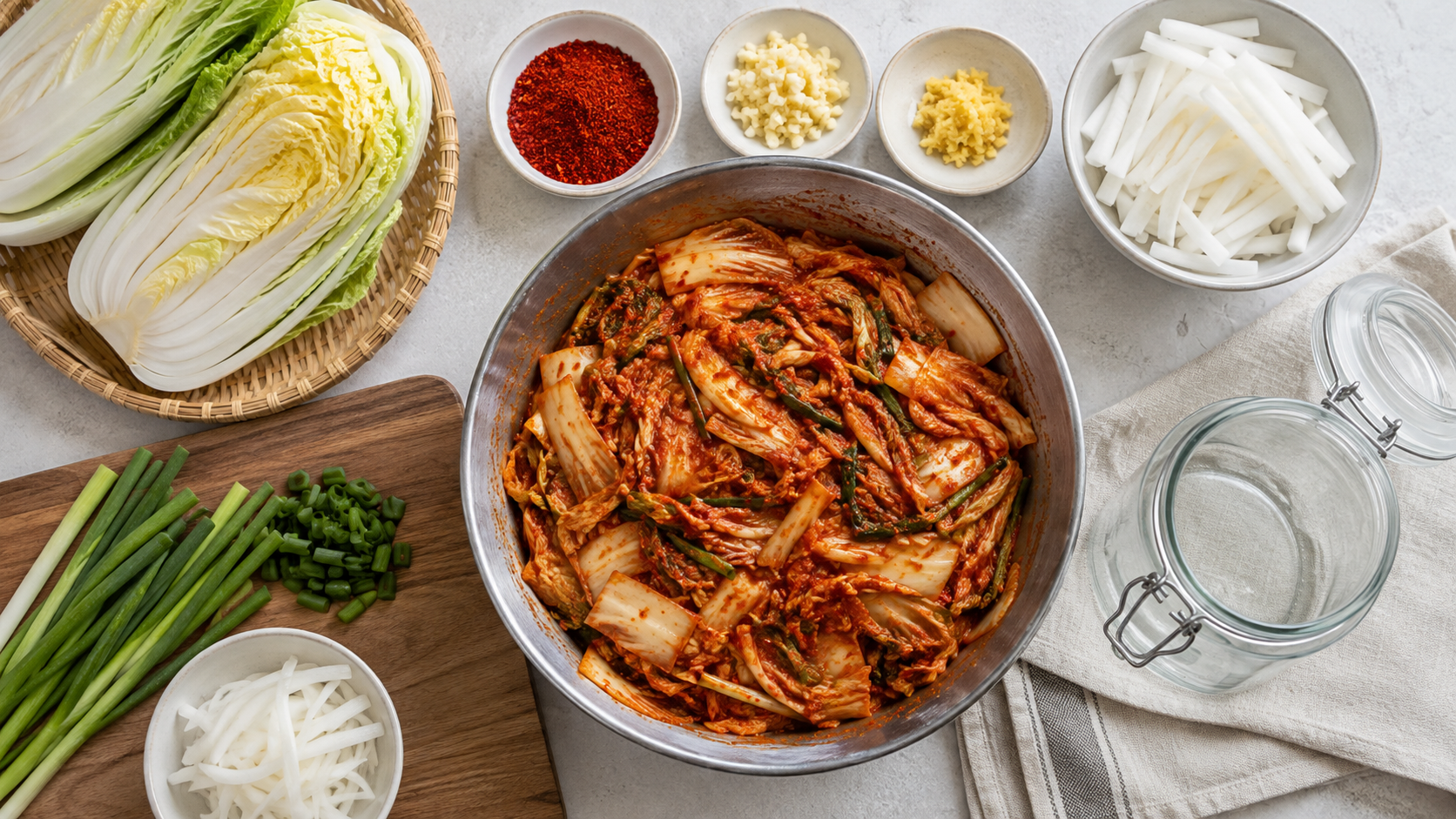
After the vegetables are seasoned, naturally occurring lactic acid bacteria begin fermentation. The kimchi gradually becomes tangier and more complex. Fresh kimchi is crisp and bright, while mature kimchi is softer and pleasantly sour.
7 Potential Health Benefits of Kimchi
1. Kimchi Can Add More Vegetables to Your Meals
The foundation of kimchi is vegetables. Napa cabbage, radish, green onions, garlic, and ginger contribute fiber and a variety of naturally occurring plant compounds. The exact nutritional value changes according to the recipe and serving size.
For someone who finds plain vegetables unexciting, kimchi can make them easier to enjoy. Just a small portion brings acidity, spice, crunch, and savory flavor to rice, eggs, tofu, or meat.
2. Traditionally Fermented Kimchi May Contain Live Microorganisms
Lactic acid bacteria play an important role in kimchi fermentation. Research suggests that fermented foods can influence the gut microbiome, although the effect depends on the food, its preparation, and the individual eating it.
If you specifically want live cultures, choose refrigerated kimchi labeled unpasteurized or contains live cultures. Pasteurization and high cooking temperatures can greatly reduce the number of living microorganisms.
3. Kimchi Provides Dietary Fiber
Because kimchi is made from vegetables, it contributes dietary fiber. Fiber supports normal digestion and also serves as food for some beneficial intestinal bacteria. Kimchi is not usually eaten in a large enough serving to provide all the fiber you need, but it can contribute to an overall fiber-rich diet.
4. Fermentation Produces Flavorful Organic Acids
During fermentation, microorganisms transform some of the sugars naturally present in the vegetables. This process produces lactic acid and other metabolites that give mature kimchi its tangy taste and distinctive aroma.
The acidity also explains why fermented kimchi tastes so different from a fresh cabbage salad. The longer it ferments, the more pronounced its sourness generally becomes.
5. It Delivers Strong Flavor in a Small Serving
Kimchi combines spicy, sour, salty, and umami flavors. A few bites can make plain rice, scrambled eggs, grilled chicken, tofu, or a grain bowl much more interesting.
This makes kimchi useful as a condiment as well as a side dish. You do not need to prepare an entire Korean meal to enjoy it.
6. Its Ingredients Contain Natural Plant Compounds
Cabbage, red pepper, garlic, ginger, and green onions contain different naturally occurring compounds that researchers continue to study. Scientific reviews describe kimchi as a complex fermented vegetable food rather than a source of only one beneficial ingredient.
However, it is important not to treat kimchi as medicine. Research on kimchi and human health is still developing, and eating kimchi does not prevent or cure a medical condition.
7. It May Help Reduce Food Waste
Kimchi changes as it ages, but older kimchi does not automatically need to be discarded. When it becomes too sour to enjoy cold, Koreans commonly cook it in fried rice, stew, pancakes, and stir-fries.
Well-fermented kimchi is particularly good for kimchi fried rice because its acidity and concentrated flavor stand up well to cooking.
Is All Kimchi Probiotic?
No. Traditionally fermented, unpasteurized kimchi may contain live microorganisms, but not every product sold as kimchi does. Shelf-stable or pasteurized kimchi may no longer contain meaningful amounts of live cultures.
Cooking kimchi also exposes it to heat. Cooked kimchi still provides vegetables, fiber, and flavor, but it should not be assumed to have the same live cultures as raw, unpasteurized kimchi.
Is Kimchi High in Sodium?
Kimchi can contain a considerable amount of sodium because salt is important to its preparation and fermentation. Sodium levels vary widely by recipe and brand, so check the Nutrition Facts label when purchasing packaged kimchi.
If you have been advised to limit sodium, use kimchi as a small condiment rather than a large vegetable serving. People managing high blood pressure, kidney disease, or another condition requiring sodium restriction should follow the guidance of their healthcare professional.
How Much Kimchi Should You Eat?
There is no universal serving that is right for everyone. For a beginner, start with about one or two tablespoons alongside a meal. This allows you to become familiar with the spice, acidity, and saltiness.
Kimchi works best as part of a balanced meal containing a protein source, grains or another carbohydrate, and additional vegetables. It is a flavorful side dish, not a complete meal by itself.
Easy Ways to Try Kimchi
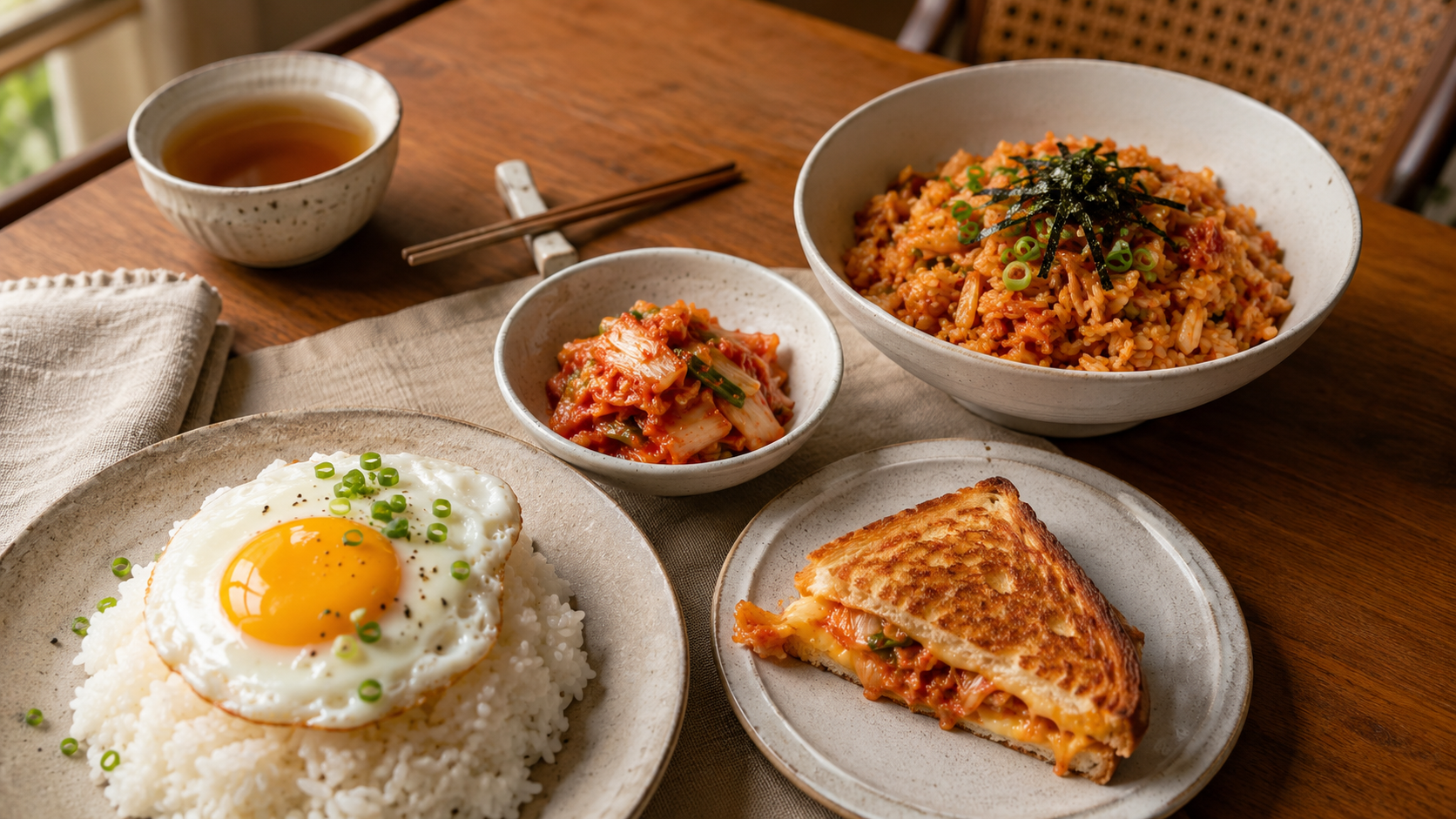
- Serve it beside steamed rice and a fried egg.
- Add a small amount to a chicken, beef, or tofu rice bowl.
- Place it inside a grilled cheese sandwich.
- Use it as a topping for tacos, burgers, or baked potatoes.
- Cook mature kimchi in fried rice, stew, ramen, or pancakes.
Frequently Asked Questions
Is kimchi good for weight loss?
Kimchi is a vegetable-based food that can be relatively low in calories, depending on the recipe. However, no individual food causes weight loss. Overall eating patterns, portions, activity, sleep, and other factors matter much more.
Can you eat kimchi every day?
Many Koreans regularly eat kimchi in small portions. Whether daily kimchi is appropriate for you depends on your diet, health needs, tolerance for spicy food, and sodium intake.
Is kimchi vegan?
Not always. Traditional kimchi may include fish sauce, salted shrimp, or other seafood products. Check the label or recipe and look specifically for kimchi marked vegan.
Does cooking destroy kimchi’s probiotics?
High heat can kill many living microorganisms. Cooked kimchi remains flavorful and still contains vegetable components, but enjoy some unpasteurized kimchi uncooked if live cultures are your priority.
Keep Going
Kimchi is one of three fermented foundations in a Korean kitchen. The other two are worth the same attention: garlic, which goes into the kimchi paste and nearly everything else, and soy sauce, which comes out of the same fermentation tradition and is far less simple to buy than it looks.
Final Thoughts
Kimchi offers vegetables, fiber, fermentation, and exceptional flavor in one small side dish. Its potential benefits are promising, but the best reason to try kimchi is also the simplest: it can make an ordinary meal exciting.
This article provides general food and nutrition information and is not medical advice.
Sources and Further Reading
- USDA Agricultural Research Service: The Health Benefits of Fermented Vegetables
- Fermented Foods, Health and the Gut Microbiome
- Review of the Health Benefits of Kimchi Functional Compounds