Korean soy sauce, in three parts: Part 1 · Where it came from · Part 2 · The kinds · Part 3 · Reading the label
The useful words on a soy sauce bottle are almost always in the smallest print on the back. Here is how to find them, and what to buy once you can.
The Short Answer
If you are standing in the aisle right now and do not want to read the whole thing, here it is.
- Turn the bottle around. The front is marketing; the back is the specification.
- Look for yangjo-ganjang (양조간장) or “Naturally Brewed.” That means it was fermented for months. If the front says only jin-ganjang (진간장) with no brewing claim, it is usually a blend of brewed and chemically produced soy sauce.
- A short ingredient list is a good sign. Water, soybeans, wheat, salt. Corn syrup and caramel color near the top are doing work that fermentation should have done.
- Buy a second bottle of guk-ganjang (국간장), soup soy sauce, when you start making soups. It is a different product, not a lesser one, and nothing else does its job.
| Method | Verdict |
|---|---|
| 한식간장 / yangjo-ganjang (양조간장) — fermented | The one to buy |
| honhap-ganjang (혼합간장) — blended | Fine to cook with, but you are paying similar money for less fermentation |
| sanbunhae-ganjang (산분해간장) — acid-hydrolyzed | The one the label is usually not eager to mention |
One thing this is not about: the country on the bottle. A Japanese soy sauce can be impeccably brewed and a Korean one can be a blend — the previous guide covers the categories in full.
How to Read the Bottle
On the Korean label
Korean food labeling requires the production category to be printed on the bottle — it is the line in the red box at the top of this page, and it is usually the smallest print you will find. Look for one of these, near the ingredients:
| Label | What it means |
|---|---|
| 한식간장 — hansik-ganjang | Traditional Korean method, soybeans only. This is guk-ganjang. |
| 양조간장 — yangjo-ganjang | Brewed. Fermented, wheat included. What you want. |
| 혼합간장 — honhap-ganjang | A blend of brewed and acid-hydrolyzed. Most common. |
| 산분해간장 — sanbunhae-ganjang | Acid-hydrolyzed only. |
| 효소분해간장 — hyoso-bunhae-ganjang | Enzyme-hydrolyzed. Faster than brewing, not acid. |
On the English label
- “Naturally brewed” on the front is a meaningful claim. Its absence on a bottle that could have made it is worth noticing.
- A short ingredient list — water, soybeans, wheat, salt — points to brewed. Alcohol as a preservative is normal and fine.
- “Hydrolyzed soy protein” or “hydrolyzed vegetable protein” in the ingredients means acid or enzyme hydrolysis is in the bottle.
- Caramel color, corn syrup, or added sugar high in the list are common in hydrolyzed and blended products, where color and sweetness have to be put back.
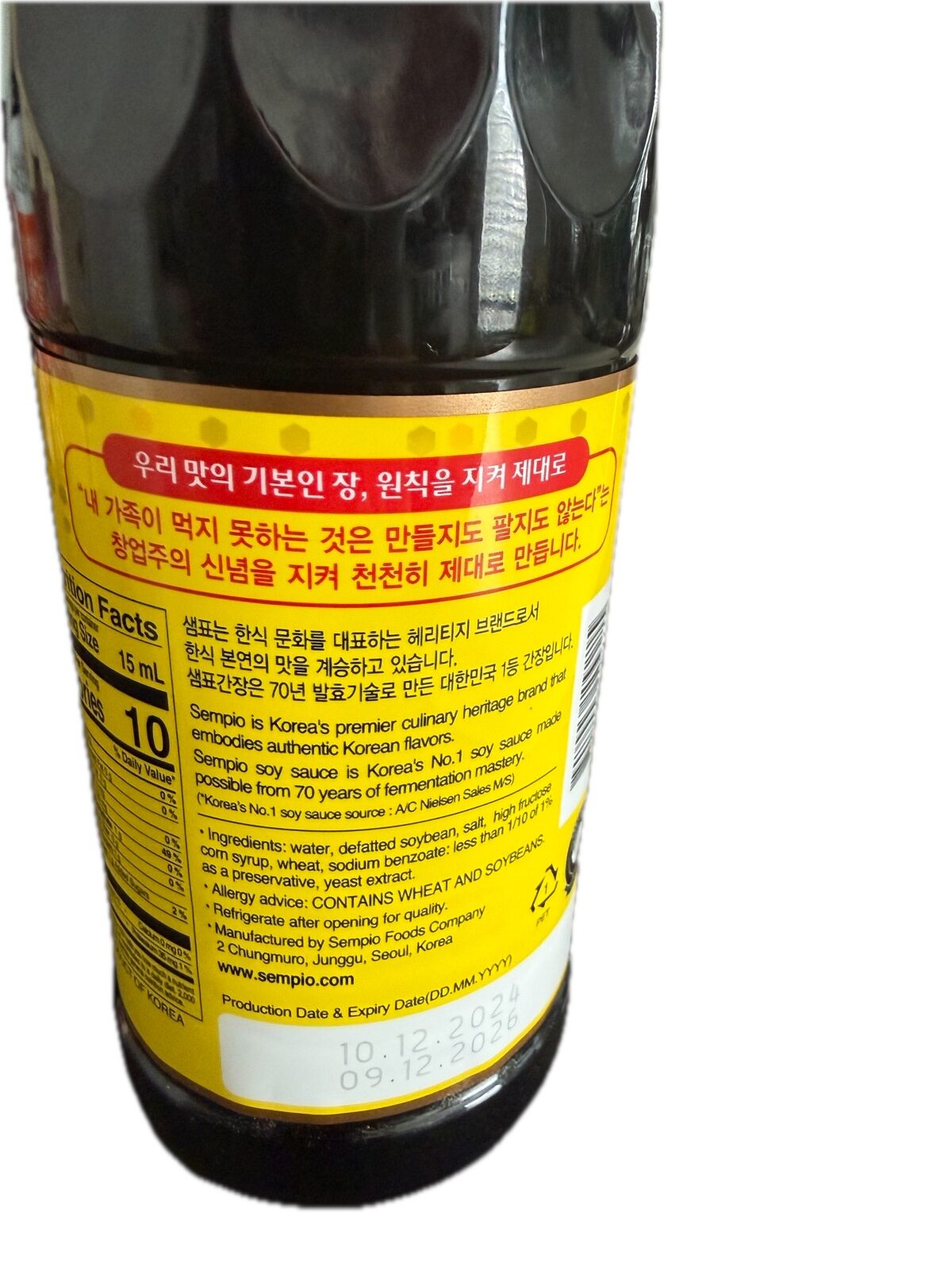
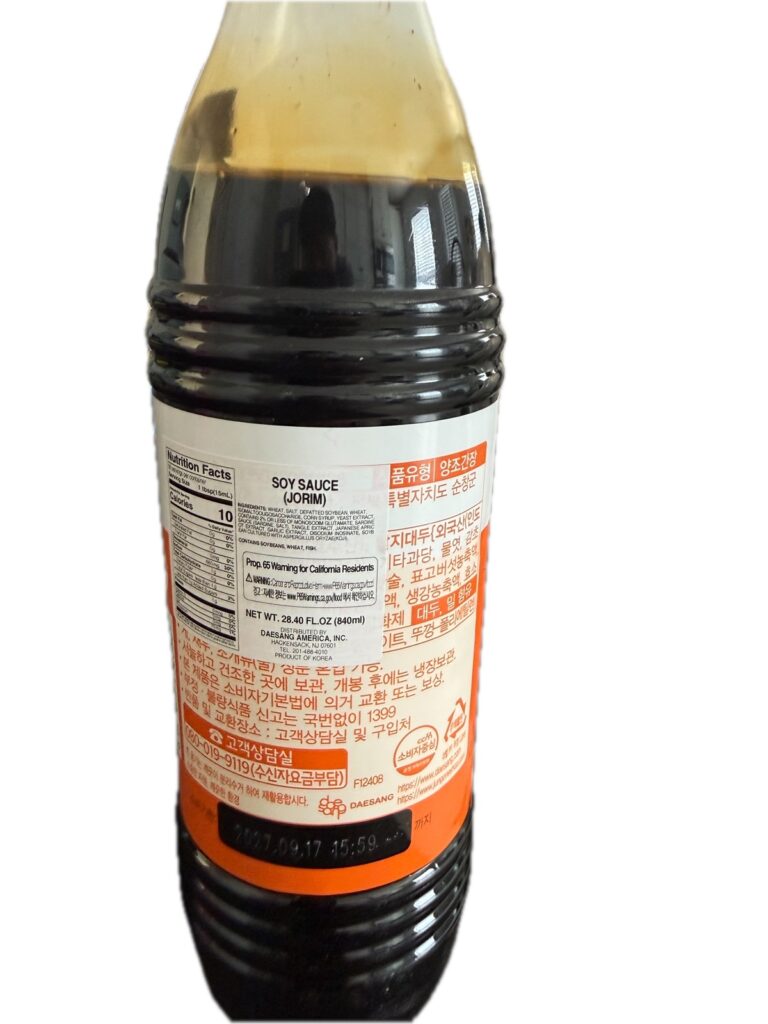
That is a useful example precisely because it complicates the easy story. A Korean brand is not automatically the more traditional product and a Japanese one is not automatically the more industrial. The bottle above lists corn syrup and yeast extract; the Kikkoman bottle earlier lists four ingredients. Neither fact makes one good and the other bad — but it does mean you have to read the specific bottle in your hand rather than reason from the country on the label.
One habit covers all of it: turn the bottle around before it goes in the cart. The front of a soy sauce bottle is marketing. The back is the actual specification.
What to Actually Buy
Two bottles cover almost everything. Here is what to look for, with specific products that are sold in the United States.
1. Your everyday soy sauce
This is the one you reach for constantly — braises, marinades, stir-fries, dipping sauce. Buy a brewed one, and ignore the word jin-ganjang (진간장) on the front.
| Product | Why | Where |
|---|---|---|
| Sempio Naturally Brewed 701 | Top brewed grade, T.N. 1.7%. Fermented six months. The default recommendation. | H Mart, Amazon, Instacart |
| Sempio Naturally Brewed 501 | Same method, standard grade. Cheaper, still brewed. | H Mart, Amazon |
| Kikkoman (regular) | Four ingredients, properly brewed. Japanese-style, so a little sweeter — pull back on sugar. | Any American supermarket |
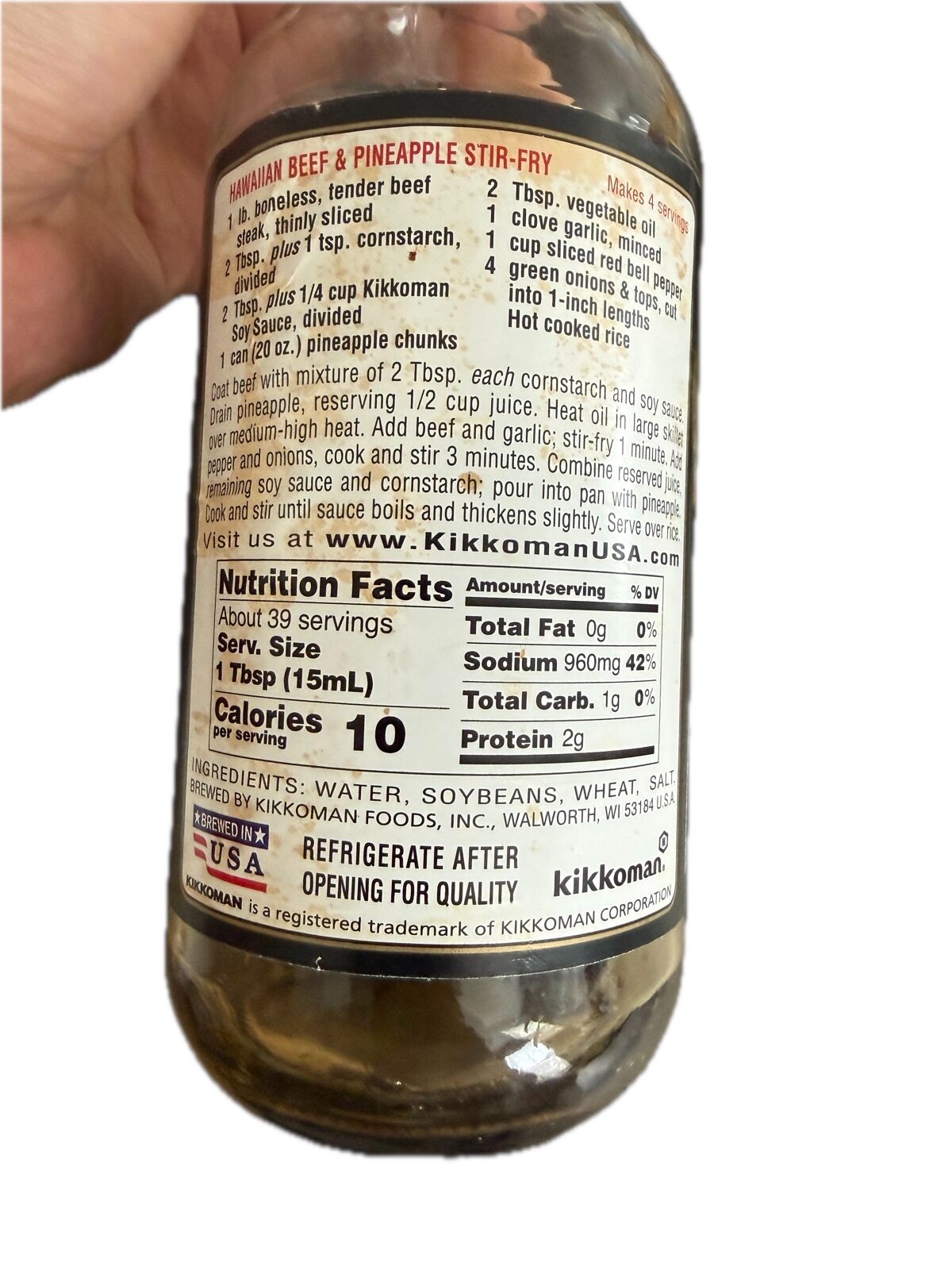
The Sempio bottles say Naturally Brewed in English on the front and carry the number. That combination is the clearest signal available on a Korean soy sauce bottle. Expect roughly nine dollars for a large bottle, though it varies by store.
2. Soup soy sauce, when you start making soups
You will use it less often, but nothing else does its job, and a bottle lasts a long time.
| Product | Why | Where |
|---|---|---|
| O’Food Korean Soup Soy Sauce | Labeled naturally brewed guk-ganjang. Widely stocked outside Korean markets. | Walmart, Amazon |
| Sempio Malgeun Joseon Ganjang | The traditional-style clear one, made for soups and namul. | H Mart, Amazon |
3. If you want the real traditional thing
Small-batch hansik ganjang made the meju-and-brine way described in the history guide is sold in the US, aged for years and priced accordingly. Q-Rapha Premium Korean Ganjang, aged over three years, unpasteurized and wheat-free, is one example on Amazon. This is a finishing soy sauce, not a cooking one — do not braise with it.
What to skip
- Anything labeled jin-ganjang (진간장) with no brewing claim. By the manufacturers’ own definition this is usually a blend.
- Chinese dark soy sauce for Korean cooking, unless a recipe specifically asks. It is for color, and it will overwhelm.
- Very cheap large bottles with long ingredient lists. Corn syrup and caramel color high up the list are doing work that fermentation should have done.
Common Questions
Does soy sauce go bad?
It does not spoil in a way that will hurt you, but it oxidizes and dulls after opening. Refrigerate it after opening if you cook with it slowly, and buy a smaller bottle if a large one takes you a year to finish.
Is soy sauce gluten-free?
Usually not — most brewed soy sauce contains wheat. Traditional Korean guk-ganjang is made without it, and Japanese tamari is typically wheat-free, but check the label rather than assuming, and look for a certified gluten-free mark if it matters medically.